
Motorcycle Storage in Malaysia: From Mopeds to Sport Bikes, and Why It Deserves Specialist Care
Updated: Jul 5
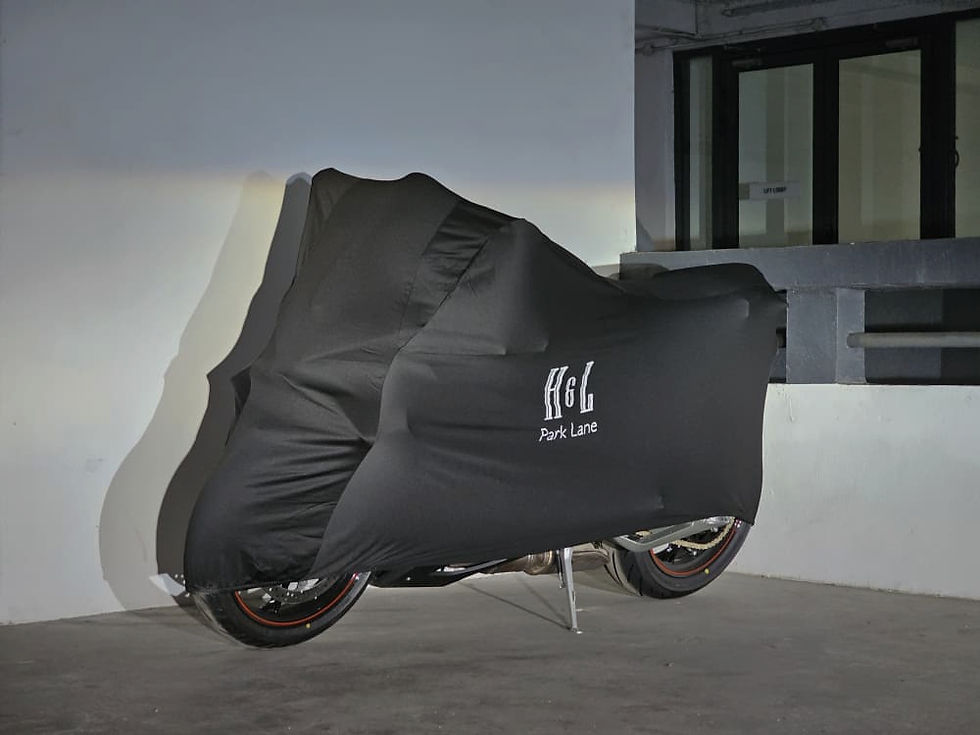
Vehicle storage conversations tend to default to cars. Motorcycles, when they come up at all, are often treated as an afterthought — a smaller, simpler version of the same problem, requiring a smaller version of the same solution. That assumption doesn't hold up well in practice.
Motorcycles face many of the same climate-driven risks as cars, but they face them with far less protection. There's no sealed cabin keeping humidity off the upholstery, no thick body panels buffering UV exposure, and no enclosed engine bay shielding fuel and electrical systems from the elements. A motorcycle is, by design, more exposed — which means the case for proper storage is, if anything, stronger than it is for a car, not weaker.
Malaysia's growing appeal as a motorcycling destination
It's worth starting with why this matters increasingly to a Malaysian audience specifically. Malaysia has quietly become an attractive base for serious motorcycling — and not by accident. The country offers a genuinely diverse range of riding terrain within relatively short distances: coastal roads along the east coast, winding highland routes through Cameron Highlands and Genting, the long sweeping curves of the East-West Highway, and well-maintained expressways that connect them all. Few countries in the region offer this much variety in scenery and road character within a single day's ride.
Malaysia's road infrastructure also compares favourably to many of its regional neighbours — well-surfaced highways, reasonably well-enforced traffic discipline on major roads, and a riding culture that's increasingly organised around clubs, weekend convoys, and long-distance touring groups rather than purely utilitarian commuting. For enthusiasts, this combination of scenery, infrastructure, and riding community has made Malaysia a destination in its own right, not simply a place to own a bike, but a place to genuinely ride one.
That growing enthusiast culture brings with it a corresponding need: bikes that are used seriously and ridden often still spend meaningful time between rides, and the value of a well-maintained machine — whether a collectible classic or a serious touring bike — deserves storage that matches the seriousness of the riding it's built for.
Different bikes, different storage needs
Just as classic cars and daily-driven SUVs have different vulnerabilities, the motorcycle world isn't a single category with uniform needs. The right storage approach depends heavily on what kind of machine is being stored.
Mopeds and scooters
Often the most overlooked category, mopeds and scooters are frequently treated as disposable utility vehicles rather than machines worth protecting — yet many owners have genuine sentimental or collector attachment to specific models, particularly older or limited-production scooters. These bikes typically have smaller fuel systems and simpler electrics, which means fuel degradation and battery drain happen faster, proportionally, than on larger machines. Plastic body panels, common on scooters, are also particularly vulnerable to UV fading and brittleness over time.
Sport bikes
Sport bikes tend to carry more sensitive componentry — performance-oriented batteries, more complex electronic systems (traction control, riding modes, quick-shifters), and tyres designed for grip rather than longevity, which makes them more prone to flat-spotting under static load. Their lower ground clearance and minimal weather protection also leave critical components more exposed to humidity and road grime than touring-oriented bikes.
Cruisers and tourers
Larger cruisers and touring bikes often carry significant chrome detailing, which is particularly vulnerable to corrosion in Malaysia's humid climate if not properly maintained during storage. Their larger fuel tanks and electrical systems behave differently from a sport bike's, and many touring bikes carry additional onboard electronics (navigation, audio systems, heated grips) that draw parasitic current and warrant the same battery-maintenance attention a modern car would need.
What unites all three categories isn't a single storage protocol, but the need for someone who understands which risks apply to which machine — rather than applying a single generic approach across very different bikes.
The risks that apply across the board
Regardless of category, a few risks show up consistently in motorcycle storage and deserve specific attention.
Chrome and exposed metal corrosion.
Unlike a car's painted body panels, motorcycles frequently feature exposed chrome, polished aluminium, and unpainted metal components — exhaust systems, engine casings, fork tubes — all of which corrode far more readily in humid conditions than a sealed, painted surface would.
Fuel system degradation.
Modern fuels with ethanol content can degrade over time, leading to gum and varnish deposits in carburettors or fuel injectors. This is a particular concern for bikes stored for several months without being started, where stale fuel can cause real starting and running problems when the bike is finally brought back out.
Chain and drivetrain care.
Chain-driven motorcycles need their drivetrains properly lubricated and protected before storage; a dry or corroded chain after months of inactivity can mean replacement rather than simple maintenance.
Tyre and battery issues
Much as with cars, remain relevant — flat-spotting from static load, and battery drain from parasitic current draw, affect motorcycles just as they affect four-wheeled vehicles, often on a faster timeline given the smaller battery capacity most motorcycles carry.
How H&L Park Lane approaches motorcycle storage
Given how different motorcycle needs are from car storage needs, H&L Park Lane treats motorcycle storage as its own dedicated package rather than a scaled-down version of car storage. This reflects the realities outlined above: different climate vulnerabilities, different battery and fuel system considerations, and a level of attention to detail — chain care, chrome protection, fuel system management — that a generic vehicle storage approach simply isn't built to provide.
For Malaysia's growing community of serious riders — whether running a single weekend touring bike or maintaining a small collection that spans decades and categories — that distinction matters. A motorcycle that's properly stored between rides is one that's ready to take on the next coastal run or highland climb without a pre-ride checklist turning into a repair job.

