How to Choose a Vehicle Storage Facility: Questions Worth Asking
Updated: Jun 23
Searching for vehicle storage in Malaysia tends to turn up a wide range of options, and at first glance, many of them look broadly similar: covered space, a gate, a price per month. The differences that actually matter are rarely visible in a listing or a quick phone call. They show up in the building itself, in how access is managed, and in details an owner usually only discovers after something has already gone wrong.
This is meant as a practical guide for evaluating those differences before committing, not a case for any particular provider. The right questions, asked early, tend to save owners from finding out the hard way that "storage" and "a place to park" aren't the same thing.
Why common parking arrangements aren't a substitute for storage
Before getting into how to evaluate a dedicated storage facility, it's worth being clear about what doesn't qualify as one, because many owners default to these options simply because they're familiar and convenient.
A rented bay in a condominium is built for daily-use convenience, not preservation. There's no humidity control and no one checking on the vehicle between visits. A space in a mall or office car park solves the parking problem but adds a privacy concern on top of it, since the vehicle sits in plain view of a constant stream of shoppers, staff, and visitors with no real oversight of its condition. Both arrangements get a car off the street. Neither one was designed to look after it.
A genuine storage facility is a different category of service altogether, built specifically around the risks a vehicle faces while sitting unused for extended periods. But not every business calling itself a "storage facility" actually delivers on that distinction, and this is where closer evaluation matters.
Learn more: The Hidden Cost of Improper Storage: Why Common Parking Workarounds Don't Protect Your Vehicle
Not all storage facilities are equal: location and building type matter
Two building types come up repeatedly when owners compare storage providers in the Klang Valley, and both carry risks that aren't obvious from a sales brochure or a quick site visit on a dry day.
Basement car parks
A basement location often reads as a positive at first: secure, out of direct sun, hidden from the street. What's less visible is that basement car parks in Malaysia frequently run at elevated humidity levels compared to ground-level or purpose-built facilities, simply because of how below-grade spaces interact with groundwater and limited natural airflow. That humidity works on a vehicle continuously, contributing to the same rust, mold, and corrosion risks that proper storage is meant to prevent in the first place.
There's a second, more acute risk that owners should ask about directly: flooding. Basement car parks are structurally vulnerable to water ingress during heavy rain, and Malaysia's monsoon season brings exactly the kind of sustained, intense rainfall that has caused real flooding incidents in basement parking structures across the Klang Valley in recent years. A vehicle stored below ground level carries genuine exposure to this risk, and it's worth asking any basement-level facility directly what flood mitigation measures are in place, and what's actually happened during past heavy rain events, rather than assuming the building's age or location makes it exempt.
Warehouses in industrial parks
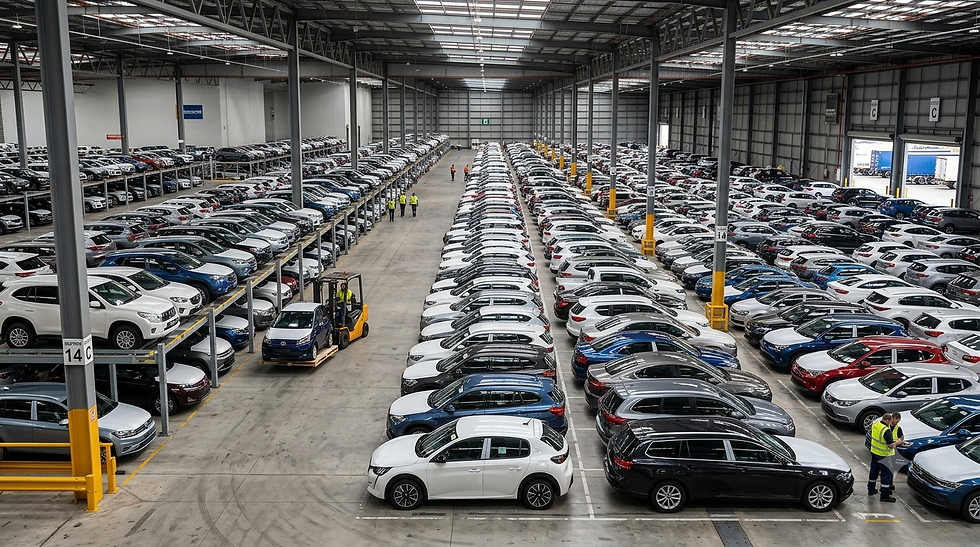
The other common setup is a converted warehouse in an industrial park, often chosen for its lower rental cost and large floor area. This brings a different set of risks. Industrial park access roads are frequently shared with heavy goods vehicles and are built, or maintained, with that traffic in mind rather than passenger cars. Potholes, uneven surfaces, and general road damage from constant heavy vehicle use are common in these areas, meaning the simple act of driving in and out of storage can expose a vehicle to road conditions that don't reflect the care being taken once it's actually inside.
There's also the question of what else shares the building, or the industrial park itself. Warehouses located near manufacturing, chemical storage, or processing facilities can expose stored vehicles to airborne chemical residue, fumes, or particulates, particularly if ventilation systems aren't specifically designed to filter for this. A storage facility's exterior building photos rarely show what's happening in the units next door, which makes this worth asking about directly rather than assuming a clean-looking facility means a clean surrounding environment.
Access policy: why unescorted access undermines accountability
One detail that often gets framed as a convenience feature deserves closer scrutiny: facilities that allow clients to walk in and access their own vehicle directly and unescorted, at any time, without staff involvement.
On the surface, this sounds like flexibility. In practice, it removes the accountability that makes professional storage meaningful in the first place. If anyone, including the owner, can access a vehicle without a staff member present or a logged record of who did what, there's no reliable way to establish what condition the car was in before and after any particular visit, who moved it, or whether anything was touched, adjusted, or damaged in the process. If a problem is later discovered, a fully open-access model leaves no clear chain of accountability to trace it back to.
This matters more, not less, for valuable vehicles. A facility that requires staff to retrieve or accompany access to a vehicle, and logs each instance of that access, isn't being unnecessarily restrictive. It's preserving the one thing that makes storage trustworthy: a clear, documented record of who has been near the vehicle and when, so that any issue can actually be investigated rather than becoming an unresolvable dispute.
Questions worth asking before you commit
A short, practical list worth working through with any facility under consideration:
Is the facility above ground level, and if not, what specific flood mitigation measures are in place, with what track record during past heavy rain events?
What is the facility's typical humidity level, and is it actively managed rather than simply a function of the building's natural condition?
What is the facility's access policy: can clients reach their vehicle unescorted, or is every visit staff-accompanied and logged?
Is the facility located near industrial, chemical, or manufacturing activity that could affect air quality inside the storage space?
What condition are the access roads in, and are they shared with heavy goods vehicle traffic?
What fire safety systems are in place, and when were they last inspected?
Does the facility provide any documented condition reporting, photographic or otherwise, when a vehicle enters and exits storage?
A facility that answers these questions specifically and confidently, rather than deflecting to general reassurances, is usually the one worth taking seriously.
What separates a professional provider from a parking lot
The pattern across all of this is consistent: the risks that matter most in vehicle storage are rarely visible in a listing photo or a five-minute walkthrough. They're in the building's location and structure, in how access is controlled and logged, and in whether anyone is actually managing the environment rather than simply providing a roof.
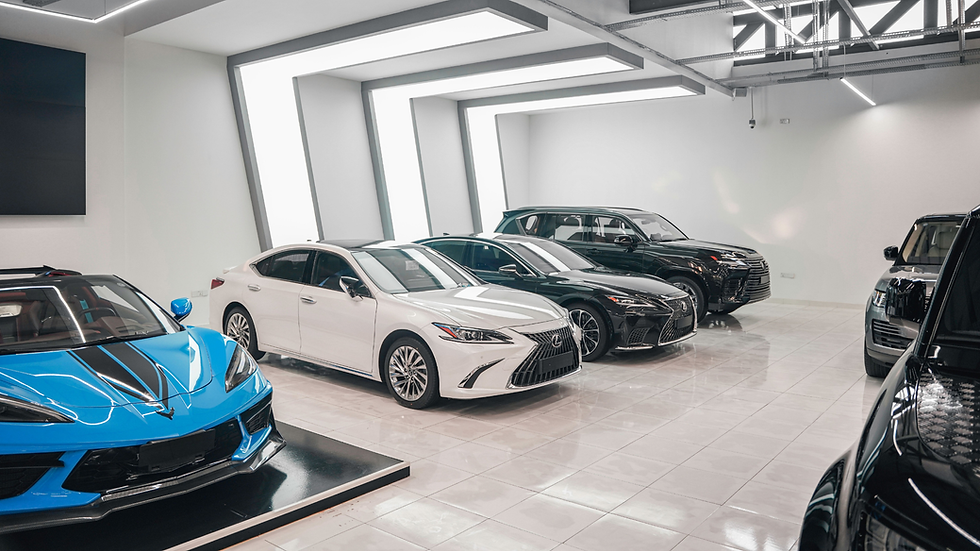
This is the standard H&L Park Lane was built around. Its facility sits above ground level, away from basement flood risk and away from the elevated ambient humidity that below-grade spaces are prone to. It isn't a converted warehouse sharing an industrial park with heavy vehicle traffic or chemical processing operations. And access is staff-managed and accountable by design, not left open for unescorted entry, so that every vehicle's condition can be properly tracked rather than simply assumed.
For owners comparing options, the questions above are worth asking of any facility under consideration, including this one. The right answers are the clearest signal of whether a provider is genuinely built around vehicle preservation, or simply offering a roof and a gate.